
TL;DR
- Suction — soft, rhythmic pressure without direct contact, good if you overstimulate easily
- Vibration — the most forgiving starting point, quiet low-rumble or sharper high-buzz options
- Rotation — spinning, stirring motion, usually paired with vibration for G-spot play
- Thrusting — in-and-out motion mechanically done for you, hands stay free
- Not sure? Start with vibration
- App control — not a sensation, a remote layer on top of any mechanism above, best for long-distance or hands-free play
Here’s the thing nobody tells you: most toys aren’t different flavors of the same sensation. They’re built around completely different mechanisms, and those mechanisms feel nothing alike. A toy that taps feels different from one that buzzes. One that spins feels different from one that pumps in and out. Once you know which mechanism you’re actually drawn to, picking a toy gets a lot less overwhelming.
We’re going to break down the main types — suction, vibration, rotation, and thrusting — plus talk about what app control actually adds on top of all of them. No fluff, no “everything you need to know” nonsense. Just what each one does and who tends to like it.
Quick Comparison
| Mechanism | What it feels like | Good for | Learning curve |
|---|---|---|---|
| Suction | Rhythmic pulses of air, like a soft mouth | Clitoral play, oral-sex fans | Low |
| Vibration | Steady buzz or pulsing patterns | Almost everyone, first-timers | Very low |
| Rotation | A spinning or stirring motion | G-spot play, combo toys | Medium |
| Thrusting | In-and-out motion, hands-free | Penetration without the effort | Medium |
| App control | Adds remote or partner control to any of the above | Long-distance, hands-free, couples | Low once set up |
Toy Quick-Reference
| Lovense toy | Mechanism | Feels like |
|---|---|---|
| Lush 4 | Vibration | Buzzing, quiet low-rumble or sharper high-buzz |
| Ferri | Vibration | Buzzing, quiet low-rumble or sharper high-buzz |
| Max 2 | Vibration | Buzzing, quiet low-rumble or sharper high-buzz |
| Nora | Rotation | Spinning, stirring motion, usually paired with vibration |
| Solace Pro | Thrusting | In-and-out motion done for you, hands stay free |
| All five | App control | Not a sensation, a remote layer on any mechanism above |
Lovense Ecosystem
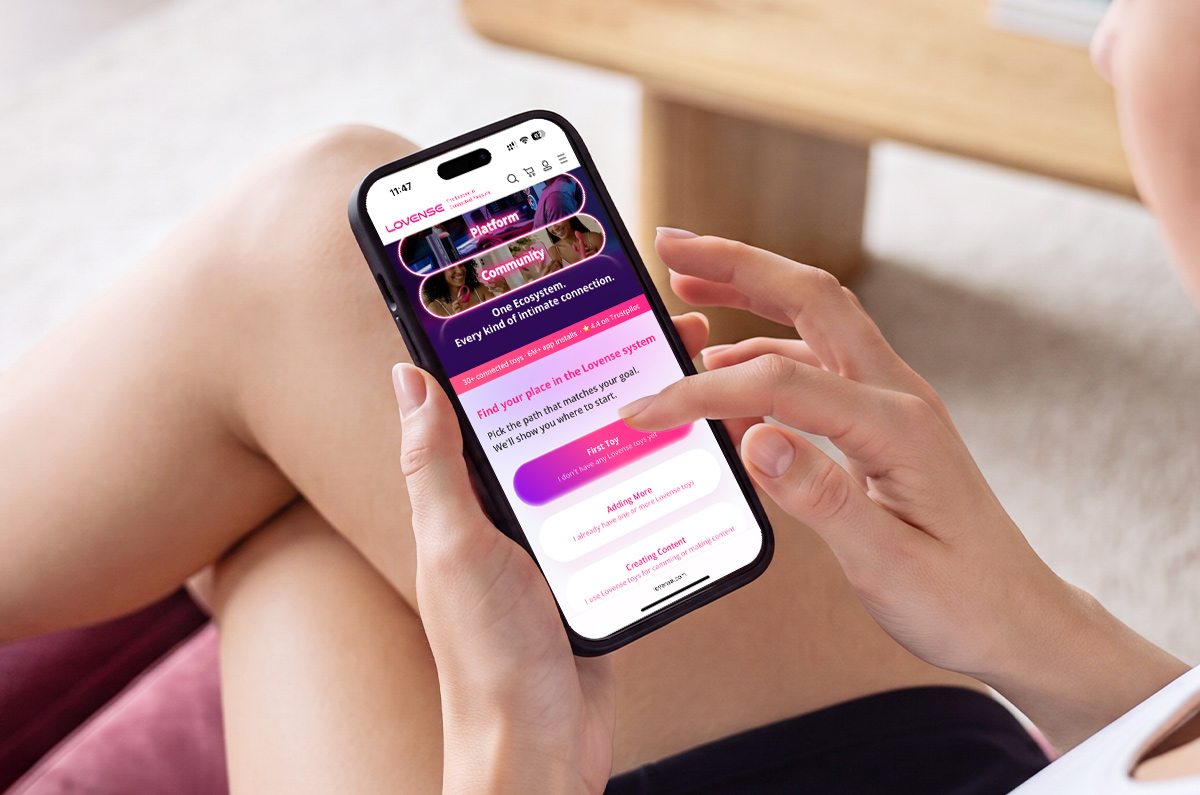
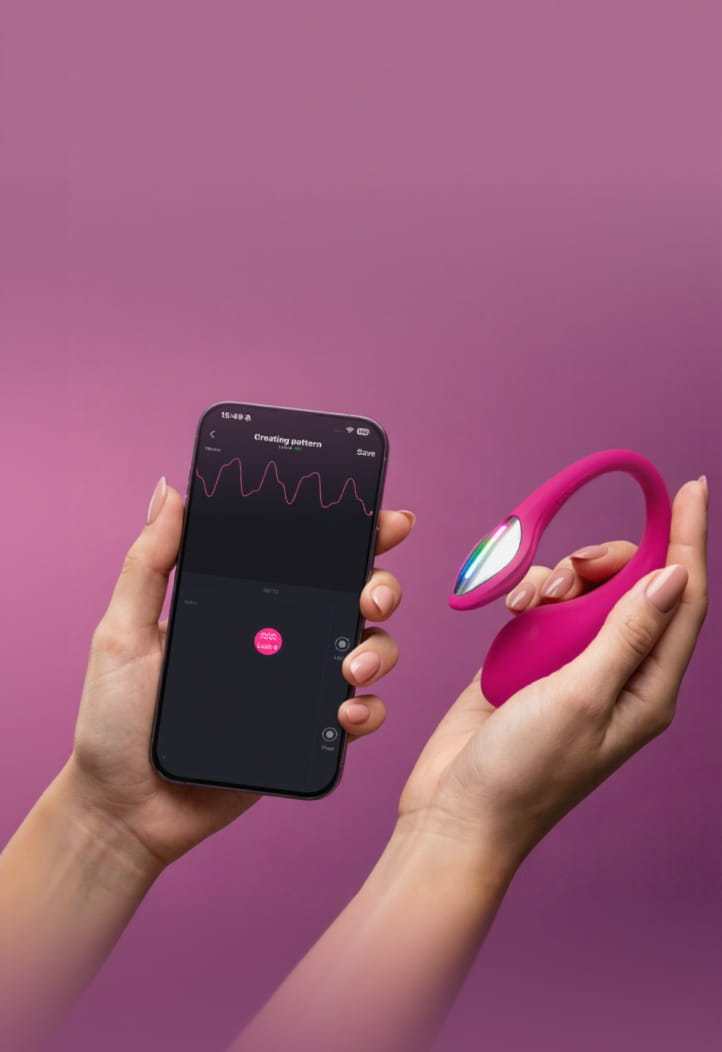
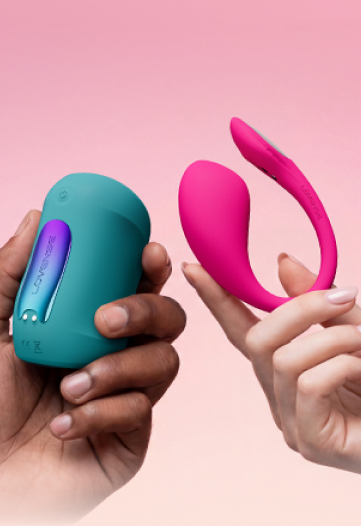
A Lovense toy can be more than a single device. With the free Lovense Remote App, you can control your toy from your phone, connect with a partner from anywhere, create custom patterns, or explore interactive features like music sync, sound control, long-distance play, and compatible content.
Lovense also works across a wider connected pleasure ecosystem, including supported games, videos, livestreams, creator tools, and community spaces. Whether you are choosing your first toy, adding to your collection, exploring couple’s play, or looking for more interactive ways to enjoy your device, the Lovense ecosystem gives you more ways to personalize the experience.
Suction Toys: The Ones That Don’t Touch You (Sort Of)
This category throws people off at first because it doesn’t work how you’d expect. There’s no vibrating tip pressed against you. Instead, a small motor pulls air in and pushes it out in fast little waves, and that creates a rhythmic pressure change around the clitoris without any direct contact at all. Some people describe it as the closest thing to oral sex a toy has ever managed. Others need a minute to get used to it, because it’s genuinely a different sensation than anything vibration gives you.
The appeal is pretty simple. It’s less intense in a “buzzing overload” way but often more intense in an “oh, that’s new” way. If you’ve ever found vibration a little too sharp or too localized, suction spreads the sensation out and softens the edge. It’s also why so many people who couldn’t orgasm with a regular vibrator suddenly can with an air-pulse toy — it hits differently, literally. Lovense Fizz is a good example.
One thing worth knowing before you buy: fit matters more here than with most toy types. The opening needs to actually seal around you for the suction to work right, so sizing and shape are not just a comfort preference, they affect whether the toy does its job at all. Read the actual dimensions, not just the marketing copy.
Vibration Toys: The One Everyone Starts With
Vibration is the default for a reason. It’s the most studied, most refined, most widely available mechanism out there, and it works for a huge range of people right out of the box. A small motor spins an off-center weight, and that spinning creates the buzz you feel against your skin. Simple mechanically, but companies have spent decades tweaking frequency, intensity, and pattern to make it feel less like “generic buzzing” and more like something you’d actually want.
A few things to know about this category:
- Not all vibration feels the same. Frequency and amplitude change everything. A low rumbly vibration feels deep and diffuse. A high-pitched buzzy one feels sharp and localized. Neither is “better,” they’re just different tools.
- Tapping and pulsing are usually vibration variants, not separate mechanisms. If a toy’s box says “percussion mode” or “tapping pattern,” that’s almost always the same motor doing rapid on-off bursts instead of continuous buzzing. It’s worth knowing so you don’t think you’re shopping in a whole different category when you’re not.
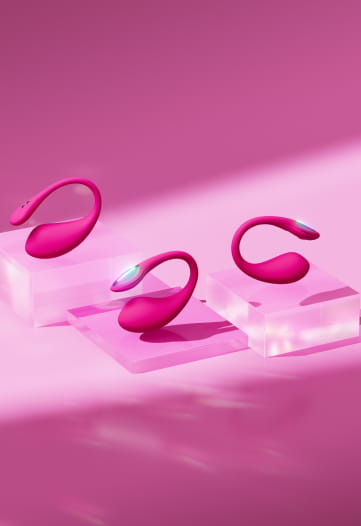
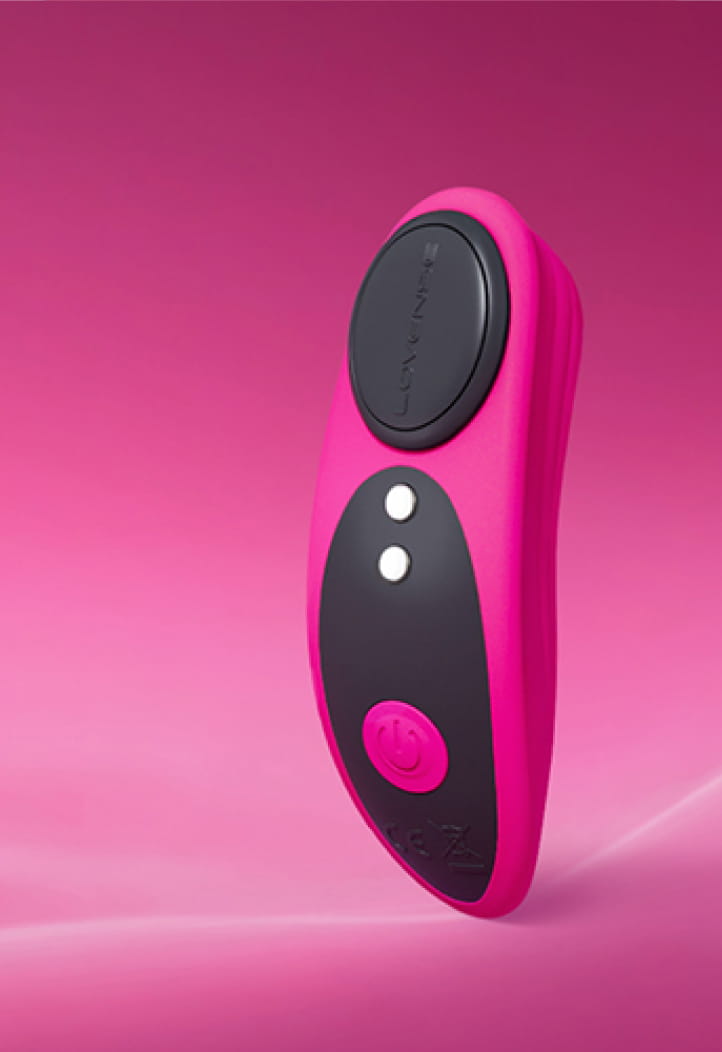
- Wearable vibrators exist specifically for hands-free or public play. Something like Lovense’s Ferri clips onto underwear with a magnet, so it stays in place while you’re moving around, and it’s app-controlled, which matters more than it sounds like it would (more on that below).
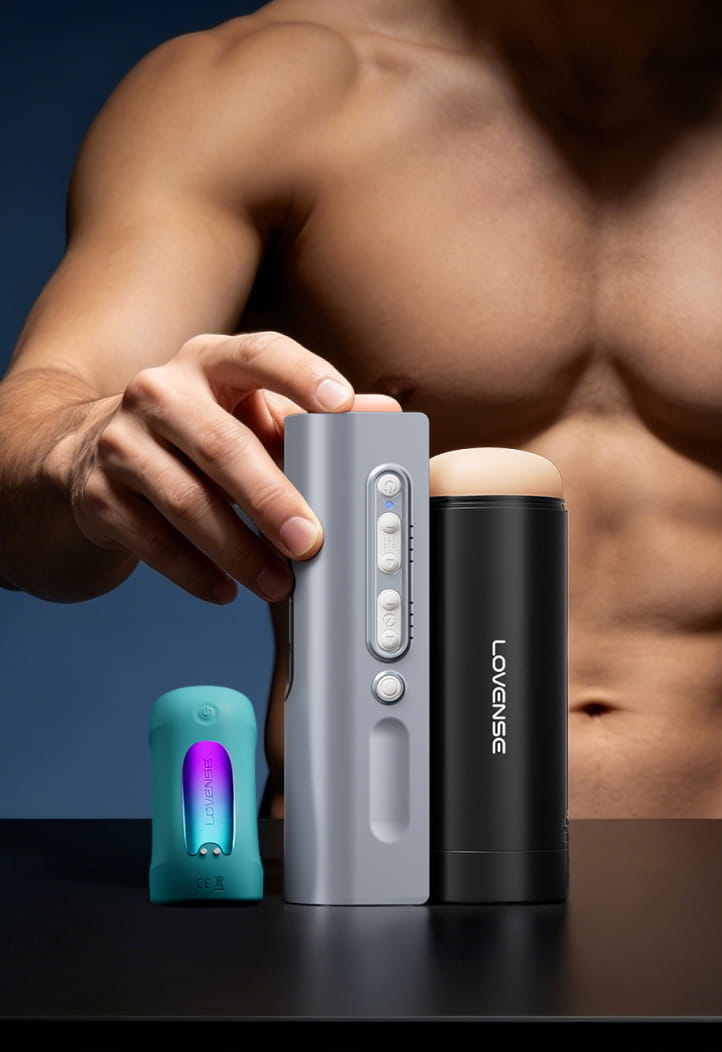
- This category also covers toys for penises, not just clitoral toys. Vibrating sleeves and strokers, like Lovense’s Max 2, use the same buzzing principle but wrap it around a different kind of stimulation, sometimes paired with gentle contraction-like squeezing.
- Lovense’s Lush 4is a good example of where this category has landed. It’s a small internal vibrator shaped for G-spot contact, controlled through an app, strong enough to feel through fabric if you’re wearing it out.
If you’ve never used a toy before, this is where most people should start. It’s forgiving, it’s familiar, and there’s an enormous range of intensity to grow into.
Rotation Toys: The Stirring Motion Nobody Talks About Enough
Quick question and answer, because this one confuses people more than it should.
So what actually rotates?
Usually the tip or head of the toy, spinning in a circular motion rather than vibrating in place. Picture stirring instead of buzzing. It’s a physical, circular pressure that moves around inside you rather than pulsing against one spot.
Does that feel like vibration, just softer?
No, and this is the part people get wrong. It’s not a milder version of vibration, it’s a different sensation entirely. Vibration is fast and repetitive in place. Rotation is slower and moves. A lot of toys combine the two, using a spinning head alongside a vibrating shaft, because they hit different nerve pathways and layering them creates something neither one does alone.
What’s it best for?
G-spot stimulation especially. The circular motion can apply steady, shifting pressure to a spot that a straight-line vibration sometimes misses entirely. Lovense’s Nora is built around exactly this combo: a rotating head paired with a vibrating bullet for external contact at the same time. It’s a two-mechanism toy in one body, which is part of why rabbit-style vibrators tend to have such a loyal following.
Is it harder to get used to than plain vibration?
A little. It’s a slightly less intuitive sensation the first time, mostly because there’s less common language around it. Give it a few sessions before deciding it’s not for you.
Thrusting Toys: When You Want the Motion Without Doing the Work
This one’s the most literal of the bunch. Instead of vibrating or spinning in place, the toy moves in and out on its own, mimicking penetrative motion mechanically. A small internal mechanism drives the shaft back and forth, and depending on the toy, you can adjust both the speed and how far it travels.
A few signs this category might be worth trying:
- You’ve said before that penetration alone, without added vibration, feels like what you actually want, but manual thrusting gets tiring or breaks the mood.
- You like the feeling of a toy doing the work so your hands are free for something else.
- You’ve tried vibration and rotation and neither quite scratched the itch, because what you actually wanted was motion, not buzzing.
- You’re interested in hands-free or app-controlled sessions, since thrusting toys pair especially well with remote control.
- You want something that syncs with adult content or a partner’s control in real time, which some higher-end thrusting toys, like Lovense’s Solace Pro, are specifically built to do, adjusting stroke speed and depth on the fly.
Solace Pro is worth mentioning specifically here because it pushes this category further than most, hitting up to 300 strokes per minute with adjustable length and real-time app control, plus syncing to adult content so the motion matches what’s on screen. It’s a strong example of where thrusting tech has landed rather than the baseline you should expect from every toy in the category.
App Control: Not Its Own Sensation, But It Changes Everything
Here’s something worth clearing up before you go shopping: app control isn’t a stimulation type. It’s a layer that sits on top of any of the mechanisms above. A suction toy can be app-controlled. So can a vibrator, a rotating toy, or a thrusting one. What app control changes is who controls it and how far away they can be while doing it.
Think about the actual use cases. A couple in a long-distance relationship can hand control of a toy to their partner through the app, no matter what country they’re in. Someone who wants hands-free play during a video call can set a pattern and let it run. A cam performer can let viewers control a toy in real time. None of that has anything to do with the sensation itself, it’s about control and connection layered on top of whichever mechanism you already picked.
It’s also worth saying plainly: app-connected toys use Bluetooth, and reputable brands build in privacy protections around pairing and data. If privacy is a concern for you (it should be, for anyone), it’s a fair question to ask before buying, and it’s worth checking a brand’s actual privacy policy instead of assuming.
So Which One Should You Actually Get?
| Your situation | Best fit | The part we haven’t covered yet |
|---|---|---|
| You’re sensitive to strong sensation or get overstimulated easily | Suction | It’s more diffuse than vibration, so it’s actually gentler on oversensitive nerve endings even at high settings, not just “different” |
| You need something dead silent for a shared apartment or thin walls | Vibration (specifically low-rumble models) | Rumbly, low-frequency vibrators run quieter than buzzy high-pitched ones at the same intensity — worth checking dB ratings, not just power level |
| You want to use it in public without anyone noticing | Wearable vibration (Ferri-style) | Battery life matters more here than sensation type — you’re planning around hours of wear, not a single session |
| You’re on a tighter budget and want to test the waters | Vibration | It’s the most mature, mass-produced category, so entry-level options are genuinely good, not just “cheap version of the real thing” |
| You want a toy that’ll still feel new to you in a year | Rotation + vibration combo | Single-mechanism toys plateau faster — you adapt to one sensation type. Combo toys give you more settings to cycle through as your tolerance builds |
| You and a partner disagree on what you each want | App-controlled, any mechanism | One toy, two sets of hands on the controls at different times — solves the “we want different things” problem without buying two toys |
| You want a toy that survives rough, frequent use | Thrusting | These have the most moving mechanical parts, so build quality and warranty length matter more here than in any other category — check that before price |
| You’re nervous about trying something and hating it | Anything with adjustable intensity + a return policy | Not a mechanism answer — a shopping answer. Buy from a retailer with actual return policies for opened toys before committing to the “wrong” one |
FAQs on Types of Sex Toy Sensations
What’s the actual difference between suction and vibration toys?
Suction uses pulses of air pressure without direct contact. Vibration uses a motor-driven buzz pressed against you. They activate nerve endings differently, so they genuinely feel different, not just “stronger or weaker” versions of each other.
Is rotation just a softer form of vibration?
No. Rotation is a circular, moving motion, while vibration is a fast repetitive pulse in one place. A lot of toys use both together because they stimulate differently.
Are app-controlled toys safe from a privacy standpoint?
Reputable brands use encrypted Bluetooth connections and don’t require personal identifying info to pair a device. Still, it’s worth reading a brand’s privacy policy before connecting anything to an app, the same way you would with any smart device.
What’s the best type of toy for a total beginner?
Vibration, almost always. It’s the most familiar mechanism, has the widest range of intensity settings, and doesn’t require the fit precision that suction toys do.
Can one toy combine more than one mechanism?
Yes, and a lot of the more popular toys do exactly this. Rabbit-style vibrators often pair rotation with vibration. Some newer toys layer suction and vibration together too.
Do thrusting toys work well for people new to toys in general?
They can, but there’s a slightly steeper learning curve than vibration, mostly around finding the right speed and depth settings. Starting on a lower setting and adjusting up tends to work better than jumping to full power.
Sex Toy Types Closing Thoughts
None of this is really about finding the “best” toy. There isn’t one. It’s about figuring out which mechanism your body actually responds to, because that’s the variable that matters most, more than price, brand, or how many settings something has on the box.
If you’ve read this far and you’re still torn between two categories, that’s normal. A lot of people end up owning more than one, because suction and rotation and thrusting genuinely don’t substitute for each other. They’re not competing for the same job.
Start with whichever one sounds most interesting to you right now, not whichever one seems “safest” or most popular. You can always add another later.