TL;DR
- Staying close across distance is about intentional time together, not any single tool.
- Calls are the foundation, presence and responsiveness matter more than the format.
- App-controlled toys can help, but they work best paired with real connection habits, not as a replacement for them.
- Five practices help: deeper questions, noticing bids for connection, trying something new, savoring memories, and using imagination.
- Also covered: setting up a first session, handling time zones, privacy, and what to do if a partner’s hesitant.
Being apart from a partner doesn’t have to mean feeling distant from them. What helps couples stay close across the miles has less to do with any single tool and more to do with how intentional the time together stays, whether that’s a call, a shared ritual, or technology built to close some of the physical gap. This guide covers what works: not just the tech, but everything around it that makes contact feel like connection rather than a workaround.
Distance Doesn’t Have to Mean Disconnection
Here’s a counterintuitive finding: some research on long-distance couples finds they report more self-disclosure, more idealization of their partner, and on some measures, more intimacy than couples who live near each other. Researchers point to strategic communication as the reason. Couples who can’t fall back on passive, low-effort contact, sitting in the same room, crossing paths in a kitchen, spend their limited contact on things that build the relationship. Take away the option of coasting on proximity, and a lot of couples end up more deliberate with the time they do have.
This isn’t a guide about managing a deficit. It’s about using tools and habits that turn distance into an asset.
For example: Lovense Nora & Max 2
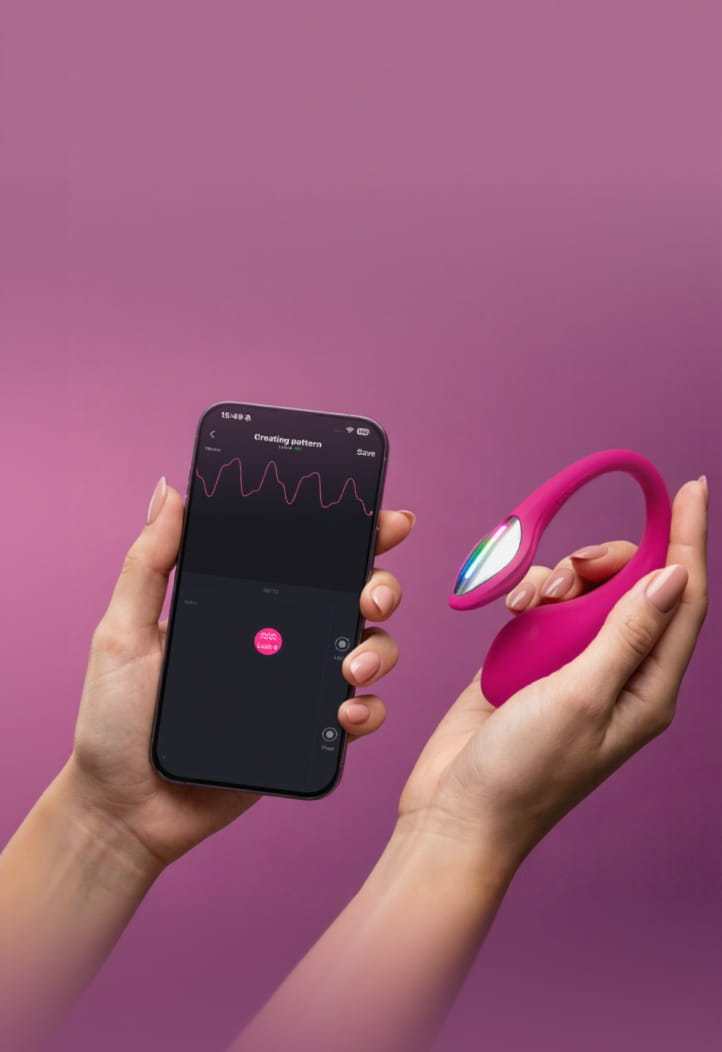
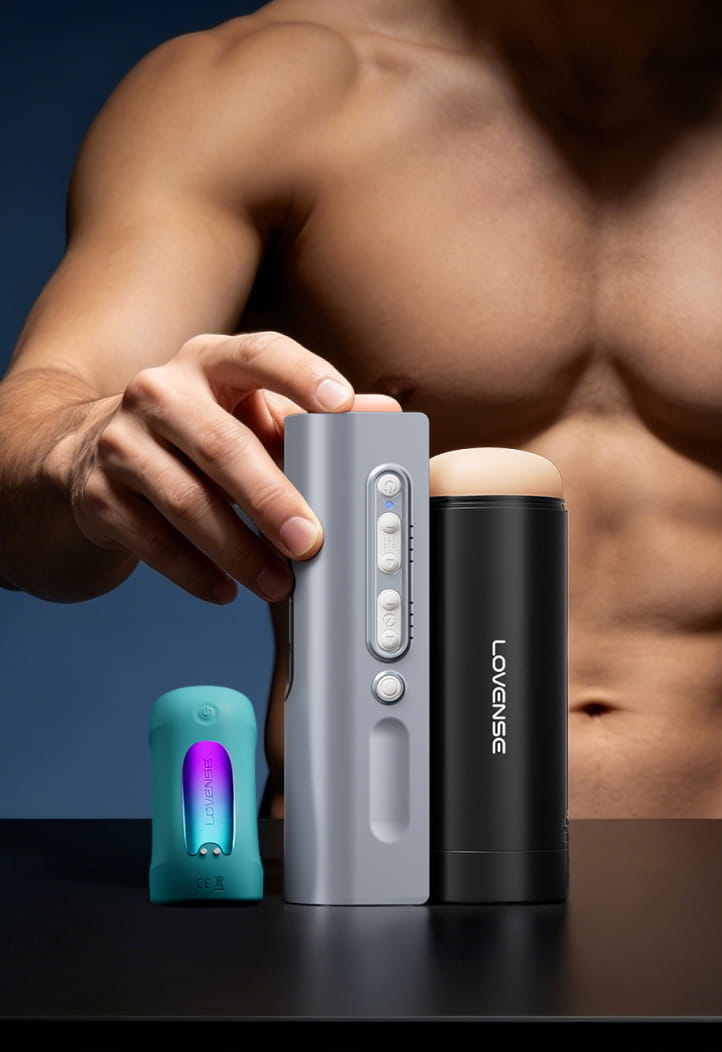
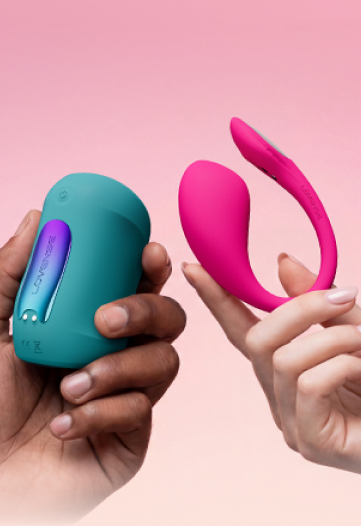
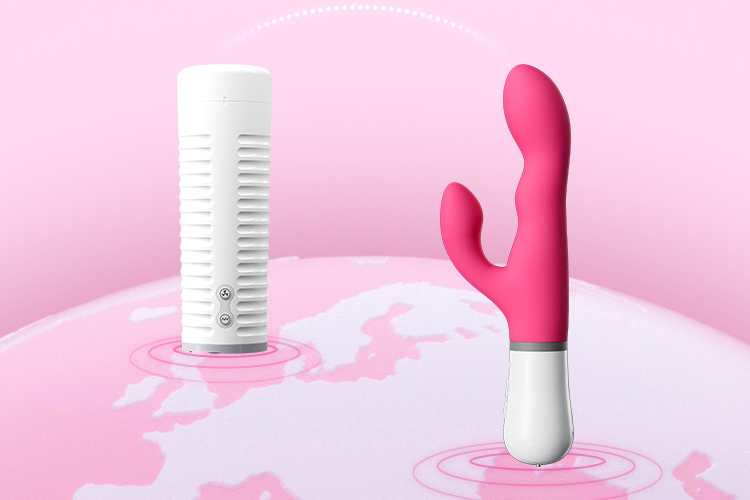
Nora and Max 2 are made to be used together, even when you’re miles apart. Nora is a rabbit vibrator with a rotating head for the G-spot and a flexible arm for clitoral vibration. Max 2 is a masturbator with vibration and 360-degree contractions inside a soft, realistic sleeve. Sync them in the app and each toy reacts to what the other one is doing, so you can feel each other from anywhere.
Video and Voice as the Foundation
Calls tend to be the backbone everything else hangs off of. Research on long-distance relationships consistently finds that frequent, responsive communication predicts satisfaction more reliably than any specific format. Video-call use on its own hasn’t shown the same strong link to satisfaction that responsiveness has.
A few things separate a call that lands from one that doesn’t:
- Presence over duration. Five focused minutes beat thirty spent half-scrolling.
- Responsiveness over frequency. Engaging with what a partner says is stronger than how often you check in.
- Naming the difference honestly. A focused check-in and a distracted one look the same from the outside but aren’t, so say plainly which one you’re able to give that day.
Everything else in this guide, the practices, the app-controlled sessions, the habits between sessions, builds on that base. Nothing here replaces it.
When One Partner Isn’t as Into It Yet
One partner being curious about app-controlled intimacy while the other feels unsure happens often. A hesitant partner is usually working through a specific worry, even if they can’t name it right away: unfamiliarity with the tech, a privacy concern, or self-consciousness about never having used a toy before.
Bring it up outside the moment itself, framed as an experiment you want to try together rather than a request. Try a line like, “I read about couples using app-controlled toys to stay connected while apart, want to try it sometime?” That keeps it low-pressure. If your partner hesitates, ask what specifically feels off rather than repeating the pitch. The hesitation is sometimes about a different worry entirely, and naming that directly untangles it faster than pushing past it. Our guide on introducing sex toys to a partner covers that whole conversation in more depth.
What Creates a Feeling of “In Sync”
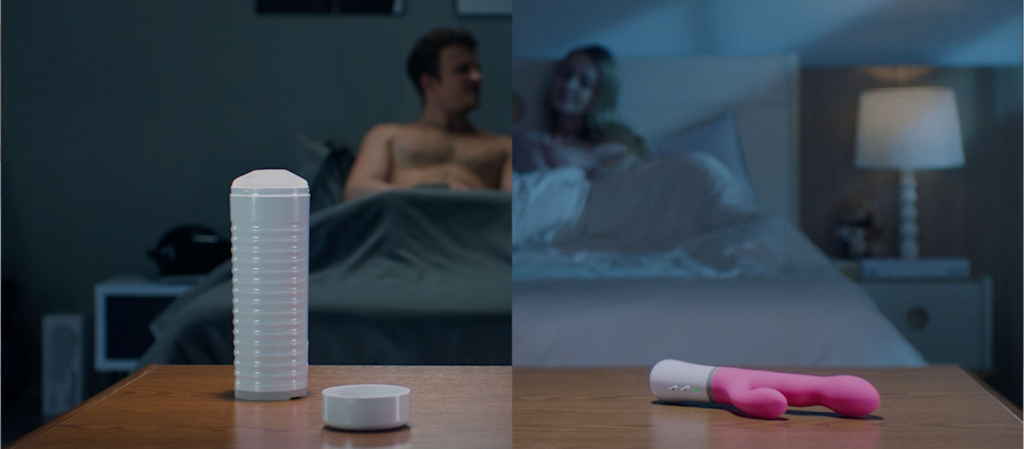
People often expect app-controlled intimacy to feel automatically close, then feel deflated when it just feels like a remote-controlled toy. The gap comes down to what’s being controlled, and how much depends on a person’s input versus a preset pattern.
| Connection Type | Who’s in Control | What It Feels Like |
|---|---|---|
| Remote Control | One partner adjusts settings through the app in real time | Direct, but still one person operating a device for another |
| One-Way Sync | One toy’s motion drives the other’s response automatically | Hands-free and responsive, though only one person’s movement shapes it |
| Two-Way Sync | Both toys respond to each other simultaneously | Closest to mutual, since both people shape what the other feels |
Feeling in sync comes down to tempo matching what’s happening between two people in a given moment: a partner’s voice, their pace, their reactions, not a slider moved on a schedule. A remote-controlled toy and a shared experience are two different things for exactly that reason. Our Toy Sync guide covers the full mechanics of how these connection types work.
Five Ways Couples Build Real Connection
None of what follows requires a toy, though each pairs naturally with one. These come from research, not vague advice to communicate more.
Ask Questions That Go Deeper
Psychologist Arthur Aron’s research found that progressively more personal questions build closeness faster than almost any other conversational approach. Skip another “how was your day” and ask something with genuine stakes behind it, what you’re proud of that rarely comes up, or a memory that keeps resurfacing. A question that takes a little vulnerability to answer lands harder than a broad, easy one.
Notice the Small Bids for Connection
The Gottman Institute’s research on relationship “bids,” small moments where one partner reaches for attention and the other turns toward it or lets it slide, is one of the more predictive findings in relationship research. Over a call, a bid can be as small as a partner mentioning something odd from work, or going quiet after a joke that fell flat. Turning toward it carries weight, and it’s easy to miss on a call specifically because the usual physical cues are gone.
Try Something New Together
A 2025 study on shared novel experiences linked presence during a new experience, not a repeated routine, to more self-expansion, less boredom, and better relationship outcomes. The novelty itself does the work, not just the shared time, like a new recipe, an unfamiliar game, or narrating an unplanned walk over the phone. Break a comfortable weekly-call pattern on purpose sometimes.
Revisit and Savor Shared Memories
Deliberately sitting with a good shared memory, rather than mentioning it in passing, is a documented practice called relational savoring, tied to measurable gains in mood and satisfaction. Pull up old photos and talk through what that day felt like, or replay a specific moment in detail rather than a quick “remember when.”
Let Your Imagination Do Some of the Work
A study on long-distance couples found that partners who used imagination, picturing a partner’s day, picturing a shared future, sustained intimacy even without physical presence. It’s a documented way distance gets bridged, and it explains why couples who describe a partner’s daily routine in detail often feel closer than couples who only trade logistics.
Nora and Max 2
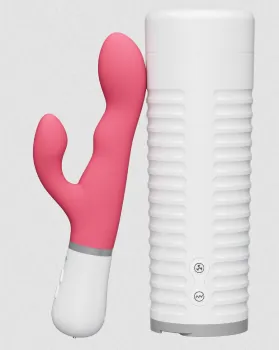
App-Controlled Interactive Long-Distance Couples Set
- Flagship long-distance set: feel each other from anywhere
- Two-way toy sync: each toy’s motion controls the other
- Realistic sensations — contractions and rotations
- The original Lovense interactive couples experience, perfected
Getting Started: Your First Session
A little structure beats winging it, especially the first time.
Before: Set the Scene Together
Pick a time that works for both of you and treat it as a firm plan. Talk beforehand about what you’re each curious about and what’s off the table, the same groundwork that matters for any new toy. Run a quick tech check, connection, app permissions, battery, so nothing fixable trips up the first attempt.
During: Pair It With One of the Practices Above
Build the session around a conversation, not just a device. Open with two-way conversation, ask a deeper question, notice a bid, before or during. A laggy connection is a minor interruption, not a failed attempt.
After: Close the Loop
A short check-in afterward, what felt good, what you’d change next time, keeps things collaborative. It’s also a fair moment to decide together whether this becomes a regular thing or stays occasional.
Timing It Across Time Zones
Time zones are one of the most common frustrations long-distance couples run into. A few things help:
- A recurring, agreed-upon window beats hoping for a spontaneous overlap, even a short, consistent slot
- Rotating who accommodates the worse time keeps it from becoming one person’s standing sacrifice
- A shared calendar with both time zones visible cuts out the mental math and the mix-ups
- A buffer before a wake-up or bedtime keeps things from feeling rushed
- If overlap is rare, lean harder on the habits between sessions, which works fine as a structure
Staying Connected Between Sessions
Not every moment of connection has to happen live.
- A short voice message for your partner to find later, more personal than a text, no coordination required
- A shared photo album you both add to over time, ordinary moments included, not just the big ones
- A physical object sent through the mail, research on long-distance couples has found tangible objects carry an emotional weight texts don’t, partly because they’re proof someone spent time and effort
- A running shared list, a travel bucket list, favorite songs, anything you’re both adding to
Privacy and Trust
Sharing real-time control of a device means knowing what that access looks like before connecting anything.
- Does the app require an account, and is it clear what that account can see or store
- Can you see who’s currently connected, and cut that connection whenever you want
- Are the permissions the app asks for reasonable for what it does
- Is this a brand with a track record, not an app neither of you has heard of
This is just due diligence, the same care any connected device deserves, not an assumption something’s wrong. Going through it together, rather than one partner assuming the other already checked, builds the kind of trust that makes deeper intimacy possible in the first place.
What This Can and Can’t Do
The research on whether simulated touch, through a screen or a device, matches the loneliness-reducing effect of physical touch is mixed. One study tested this directly, adding simulated touch to a video call, and found it lowered loneliness no differently than the call alone did. What did matter, separately, was how often touch happened in the relationship overall, full stop. App-controlled intimacy still counts for something, but its value comes less from replicating touch and more from the attention built around using it, which is exactly why pairing it with the practices above outweighs the device on its own. Expecting that going in tends to make the experience feel like a win, since it’s not being measured against a standard it was never built to meet.
Tools That Help You Get There
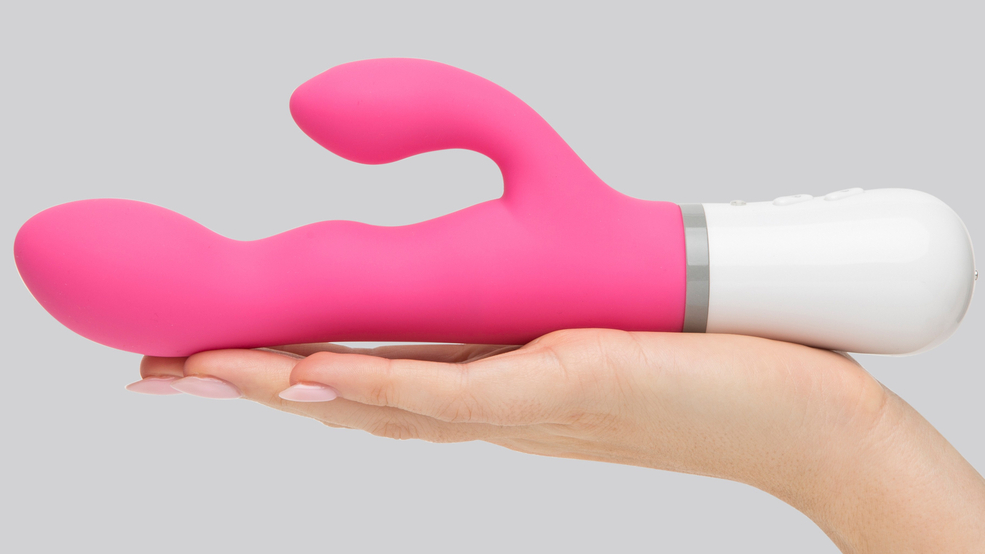
Lovense’s app-controlled toys are built around the kind of responsive connection this guide has been describing, a partner’s own input shaping what you feel rather than a preset pattern on a timer.
| Product | Connection Type | Why It Fits |
|---|---|---|
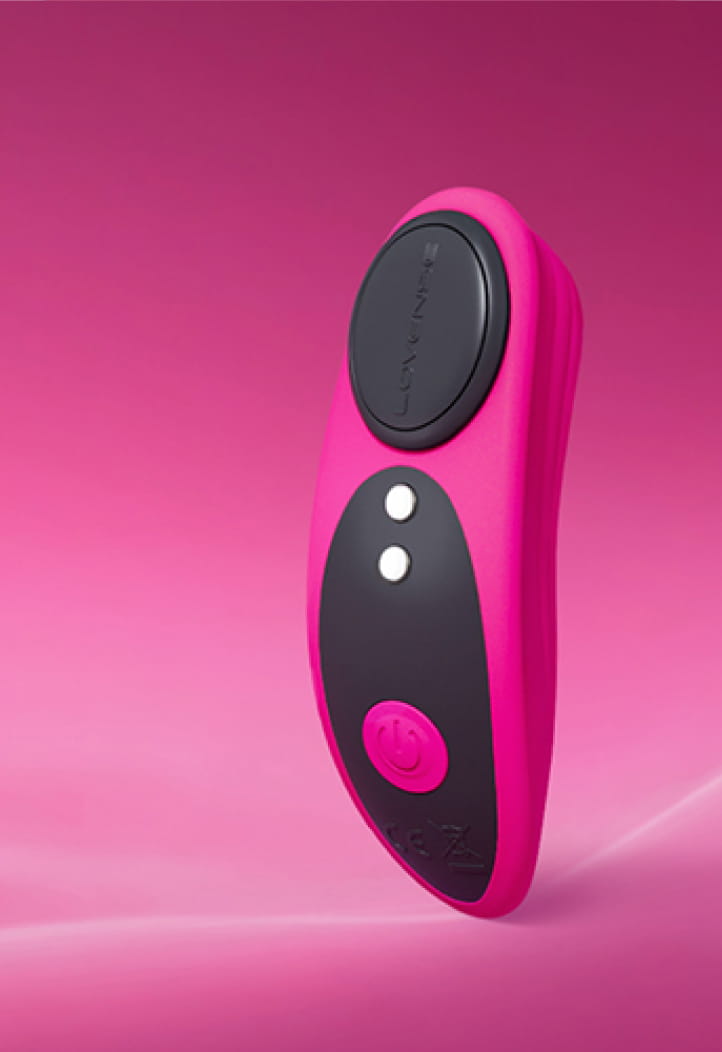
| Lush 4 | Remote Control | Wearable, app-controlled, easy starting point for a partner to take the reins from anywhere |
| Ferri | Remote Control | Discreet panty vibrator, good for extended, all-day teasing over distance, not just a single session |
| Max 2 | One-Way Toy Sync | A Master Controller toy, its motion drives a paired toy’s response automatically |
| Nora | One-Way / Two-Way | Works as a standalone remote toy, or pairs with Max 2 for synced, mutual response |
| Solace Pro | Two-Way Toy Sync | Pairs with Mission 2 for genuinely mutual, simultaneous response, the closest this article’s “in sync” concept gets to real |
| Lovense Connect | Platform Feature | The underlying app/account layer that powers remote and synced control across all of the above, worth a mention as the connective tissue, not a toy itself |
Lovense Remote is the app that powers all of this, not a toy itself, but the connection layer that makes remote and synced control possible.
Lovense Ecosystem
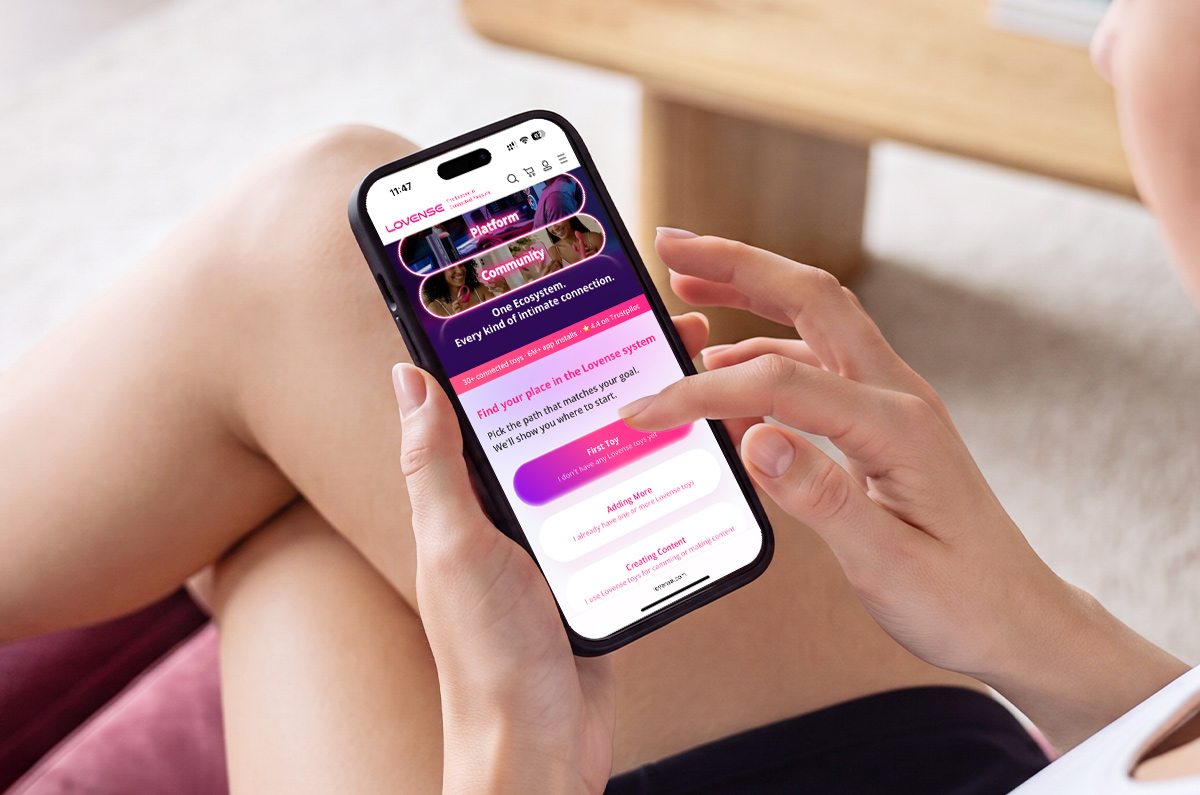
A Lovense toy can be more than a single device. With the free Lovense Remote App, you can control your toy from your phone, connect with a partner from anywhere, create custom patterns, or explore interactive features like music sync, sound control, long-distance play, and compatible content.
Lovense also works across a wider connected pleasure ecosystem, including supported games, videos, livestreams, creator tools, and community spaces. Whether you are choosing your first toy, adding to your collection, exploring couple’s play, or looking for more interactive ways to enjoy your device, the Lovense ecosystem gives you more ways to personalize the experience.
- Learn more about long-distance sex toys
- Explore sex toys syncing possibilities
- Find more intimacy ideas
App-Controlled Intimacy FAQs
Does this feel different from a regular remote-control toy?
It can, but the difference comes from how it’s used, paired with presence and attention, not the technology by itself.
What’s a good first ritual to try?
A recurring, agreed-upon time, one deeper question to open the call, and a toy session folded into that conversation rather than kept separate.
Is sharing control actually private?
Depends entirely on the app. Check account requirements, who can connect, and whether access can be revoked before assuming anything.
Does this work for any kind of distance, not just formal long-distance relationships?
Yes, the same principles hold for a long-term LDR, a work trip, or just living in different cities for a while.
What if the connection lags or drops mid-session?
It happens. Treat it as a technical hiccup rather than a ruined moment, and it won’t overshadow the rest of the time together.
Closing
Show up for each other on a schedule that holds. Build in a few habits the research supports. Use technology that responds instead of just running on a timer. That combination closes the distance, the device does part of the job, and the presence behind it does the rest.
Want More Reads?
- Lovense Sync Explained: Remote Control vs. Two-Way Sync
- How to Choose Types of Sex Toys with Suction, Vibration, Thrusting & App-Control
- Couples Sex Toys: How to Introduce Them to Your Partner
- Remote vs. Traditional Vibrator: Which Is Better for LDR Couples?