

TL;DR
- Cuckolding is a consensual dynamic where one partner is turned on by their partner having sex with someone else — the key difference from cheating is that everyone knows and agrees.
- Common terms: bull (the outside partner), hotwife, cuckquean, cuckoldress — none are mandatory to use.
- It taps into things like compersion (joy from a partner’s pleasure) and eroticized jealousy, and it’s more common as a fantasy than most people assume.
- Not limited to straight men — women, same-sex couples, and non-binary people all take part in versions of it.
- Works best with ongoing communication, not a one-time agreement
What Is Cuckolding?
Cuckolding is when one partner gets aroused, excited, or emotionally invested in their partner having sex with someone else — and both people know about it and want it happening. It can stay entirely in fantasy, come up in pillow talk, or play out in real life with agreed-on boundaries. What makes it cuckolding rather than something else is that nobody’s being deceived.
The word has been around for centuries, and it didn’t always mean this. “Cuckold” originally described a husband whose wife cheated on him without his knowledge — a punchline, not a preference. Somewhere along the way that flipped. Now the term (and its verb form, “cuckolding”) mostly describes something people choose, not something that happens to them behind their back. That reversal is really the whole story here.
Cuckolding vs. Cheating: The Consent Line
People hear “cuckolding” and often assume it’s just cheating with a nicer name slapped on. It isn’t, and the difference comes down to one thing: whether everyone involved knows what’s going on.
Cheating relies on secrecy. Someone finds out later, if they find out at all, and that discovery is where the damage lives. Cuckolding runs the other way entirely. The partner who isn’t having outside sex isn’t just tolerating it — a lot of the time they’re actively into it, whether that means hearing the details afterward, being in the room, or helping set the whole thing up.
That distinction only holds if consent stays current. Not a one-time yes that covers everything forever, but something both people keep checking on as things go. If that consent quietly disappears and one partner keeps going anyway, the label stops applying. At that point it’s cheating, no matter what anyone calls it.
None of this makes the emotional side simple. Even fully consensual, plenty of people feel a real hit of jealousy or insecurity mixed in with the arousal — and for a lot of them, that mix is part of the appeal rather than something to stamp out. The difference from cheating was never that hard feelings vanish. It’s that both people agreed to sit with them together, out loud, instead of one partner getting blindsided.
The Terminology
A handful of terms come up constantly once you start reading about this. Here’s what they actually mean.
| Term | What It Means |
|---|---|
| Cuckold (“cuck”) | Usually the partner who’s aroused by watching or knowing their partner is with someone else. The traditional image is a straight cis man, but the role isn’t limited to that. |
| Bull | The person having sex with the cuckold’s partner. Sometimes chosen for specific traits the couple finds appealing; sometimes it’s just whoever fits and both partners like. |
| Hotwife | In a heterosexual setup, the female partner having sex with other men, usually with her partner enthusiastically involved rather than just permitting it from a distance. Some treat “hotwifing” as its own thing — lighter on humiliation, heavier on shared enjoyment. |
| Cuckquean | The female version of a cuckold: a woman who gets aroused watching or knowing her partner is with someone else. |
| Cuckoldress | A woman who enjoys cuckolding her partner, often with more of a dominant or teasing edge than “hotwife” usually implies. |
You don’t need any of this vocabulary to do the thing itself. Plenty of couples build their own version and never bother naming it.
The Psychology Behind It
A few different threads tend to feed this fantasy, and they explain why it’s a lot more common than the silence around it would suggest.
Compersion shows up constantly in these conversations – feeling real joy because your partner is enjoying themselves, even when you’re not the one making it happen. It’s basically the reverse of jealousy. For people who feel it strongly, watching a partner get pleasure elsewhere can register as reassuring instead of threatening.
Power exchange matters too. Cuckolding overlaps heavily with BDSM themes – dominance, submission, eroticized humiliation – even with none of the usual gear or scene-setting. Sometimes the emotional charge of the situation is the whole kink, with nothing physical required to make it work.
Then there’s eroticized jealousy on its own. A small, controlled dose of jealousy is genuinely arousing for some people rather than distressing. The discomfort isn’t a side effect to tolerate – it’s part of what’s turning them on.
However people land on it, the fantasy is far more widespread than people assume. Sex researcher Justin Lehmiller found that roughly 45% of men report having fantasized about watching a partner with someone else. That’s not a fringe number. That’s closer to half.
Some researchers also point to sperm competition theory – the idea that certain sexual fantasies trace back to evolutionary pressure around paternity and reproduction. It’s one theory among several, not settled science, and the consensual, carefully-negotiated version people practice today looks almost nothing like whatever evolutionary root it might have. Still, it’s part of why some researchers think this fantasy runs deeper than modern relationship trends.
And honestly, none of it needs a scientific backstory to be legitimate. A lot of people are simply into it because it feels exciting or freeing in a way that’s hard to fully put into words, and that’s a fine enough reason on its own.
Worth separating out: fantasizing about something and actually doing it are two different levels of interest, and most people who find cuckolding arousing to think about never act on it in real life. That’s not a failure or a sign the fantasy doesn’t “count” – plenty of sexual interests live entirely in the imagination and stay satisfying there. The gap between how many people fantasize about this and how many actually try it is probably one reason the topic still feels more taboo than the numbers would suggest it should.
Who Actually Does This
The default image is a straight cis man watching his wife or girlfriend with another man. That’s the traditional framing, and it’s still the version that gets talked about most, but it’s nowhere near the only one.
Women can be cuckolds too, more precisely described as cuckqueans or cuckoldresses. Same-sex couples build their own versions of this. Non-binary and genderfluid people show up in every role, not just as the outside party. Depending on the couple, the “bull” role isn’t reserved for men either.
Strip away the gendered script and what’s actually defining the dynamic is arousal, consent, and emotional engagement around a partner’s outside sex – not who’s doing the watching or who’s being watched.
It’s also worth saying plainly: this isn’t a symptom of a relationship in trouble, and it’s not evidence of low self-esteem or sexual inadequacy on anyone’s part, despite how often the word gets thrown around as an insult in completely unrelated contexts online. For people who genuinely enjoy this, it usually works less like a patch over something broken and more like any other consensual sexual interest – something that adds to what’s already there.
That insult usage deserves its own note, since it’s probably where a lot of people first heard the word. Online, “cuck” gets tossed around as a way to mock someone as weak or submissive, completely detached from anything sexual. That version borrows the old, pre-consent meaning of the word – the humiliated husband who didn’t choose his situation – and turns it into a generic put-down. It’s worth knowing that history, mostly so the slur and the actual practice don’t get confused for each other. They’re not really talking about the same thing anymore.
How Couples Approach It Together
For couples who are curious, most people who’ve actually done this land on the same starting point: talk about it before you try it.
That usually starts small. Fantasy, pillow talk, a real conversation about what specifically appeals to each person and why. Some couples never leave that stage, and that’s a complete outcome on its own, not a failure to follow through. Others move toward exploring it for real, almost always after settling clear boundaries first — what’s okay, what’s off-limits, how much detail gets shared afterward, and what happens the moment either person wants to stop.
A few specifics tend to come up in these conversations:
- How much detail a partner wants to hear afterward — some want the full play-by-play, others want almost nothing
- Who’s off-limits — certain people ruled out entirely from the start
- How the outside partner is treated — and talked to, before and after
- What a check-in looks like once it’s over
None of this has to get nailed down all at once. Most couples figure it out gradually, adjusting once they see what actually feels good versus what only sounded good as a conversation.
Ongoing check-ins end up mattering just as much as the first conversation did. Feelings shift. Something that sounded thrilling in theory can land differently once it’s real, and that’s a normal part of the process, not a sign anything went wrong. Couples who treat consent as something to keep revisiting tend to come out of this feeling closer. Couples who treat one early yes as permanent tend to run into resentment they didn’t see coming.
And it’s fine if this isn’t for you. It’s one dynamic among many, not a checkbox on the way to some more “evolved” relationship. Being curious about it doesn’t obligate anyone to try it — plenty of people find that simply talking it through scratches the itch on its own.
Try smart sex toys in your cuckolding adventures?
Edge 2 – Adjustable Prostate Massager
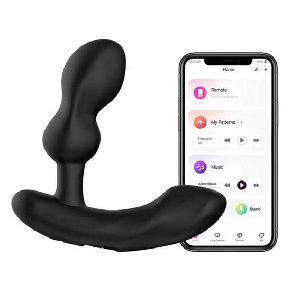
- Adjustable neck, targeted prostate play
- Dual motors, deep vibrations
- Great for edging and control-focused play
- App-controlled, hands-free
Lush 4 + Ferri Bundle

- G-spot egg + magnetic panty vibrator
- Hands-free, whisper-quiet
- Music sync, long-distance control
- Dual stimulation
Lovense Ecosystem
A Lovense toy can be more than a single device. With the free Lovense Remote App, you can control your toy from your phone, connect with a partner from anywhere, create custom patterns, or explore interactive features like music sync, sound control, long-distance play, and compatible content.
Lovense also works across a wider connected pleasure ecosystem, including supported games, videos, livestreams, creator tools, and community spaces. Whether you are choosing your first toy, adding to your collection, exploring couple’s play, or looking for more interactive ways to enjoy your device, the Lovense ecosystem gives you more ways to personalize the experience.
Frequently Asked Questions
No. The difference is consent. Cheating involves deception; cuckolding involves both partners knowingly agreeing to what’s happening.
They’re closely related and the terms get used loosely. Cuckolding tends to carry more emphasis on humiliation or power exchange, while hotwifing leans more toward shared enjoyment — though plenty of couples blend the two or define them their own way.
No. The traditional framing centers a male cuckold, but women, same-sex couples, and non-binary people all take part in versions of this dynamic.
Reasons vary, but compersion (feeling joy from a partner’s pleasure), eroticized jealousy, and power-exchange dynamics similar to BDSM all show up as common threads.
More common than most people assume. One widely cited study found roughly 45% of men have fantasized about watching a partner with someone else — a number that suggests it’s far more widespread than it’s openly discussed.
Not necessarily formal, but clear conversation about boundaries, expectations, and what happens if someone wants to stop is something most experienced couples treat as essential, not optional.
The Bottom Line
Cuckolding gets reduced to a punchline or an insult more often than it gets an honest explanation, but the actual dynamic runs on something far more deliberate: consent, real communication, and a genuine wish to share pleasure in a way that doesn’t fit the usual script. It’s not for everyone, and it was never supposed to be. For the people it does click with, understanding the real distinctions — the terminology, the psychology, what actually separates it from cheating — tends to matter a lot more than whatever stereotype shows up first in a search result.
Want More Reads?
- How to Use a Vibrator During Sex: Best Positions and Tips for Couples
- How to Eat Pussy: A Complete Guide to Going Down on a Woman
- 100 Femdom Ideas for Beginners to Advanced Players