Have you ever had the urge to indulge in some prostate play, but didn’t have the right toy to hand? Exploring “the P-spot” can unlock deep pleasure and, for many men, lead to some of the most powerful orgasms they’ve ever experienced.
It’s not a surprise, therefore, that people are now experimenting with DIY prostate stimulators, driven by curiosity, the appeal of custom designs, and the potential to save money. For some, it’s a creative project; for others, it’s about crafting something that feels just right for their body.
Also, if you’re curious but hesitating, you’re in the exact place many beginners start. Maybe you’re wondering whether prostate play is messy, whether you need an enema or anal douche first, whether it can actually be comfortable, or whether you’re going to do something wrong. This guide keeps the first step simple: what is safe, what is risky, how to start anal play safely, and when a beginner-friendly option like Edge 2 may be easier than turning curiosity into a DIY project.
Ready to dive in?
Is It Safe to Make a DIY Prostate Stimulator?
Making your own prostate stimulator can be safe, but only if you understand the risks and stick to strict safety guidelines. The prostate is delicate, and so is the surrounding tissue, so the wrong material, shape, or design can quickly turn a fun idea into a painful mistake. Here’s what to consider when making or using a homemade toy.
REMEMBER: The biggest mistake is treating prostate play like something you have to force your way through. Comfortable anal play is about control, not tolerance. If you are searching for painless anal sex tips or wondering how to relax for anal play, the answer usually starts with the same basics: go slowly, use plenty of lube, choose a smooth beginner-safe size, and stop if your body tightens or discomfort builds.
Here’s some more reading around anal play and pleasure:
➡️ Anal Training Guide: How Your Partner Can Help You Get Comfortable Faster
➡️ Real Tips on How to Have Anal Sex Without the Ouch (Or the Awkward)
Common Risks of DIY Prostate Toys
The biggest risks come down to three things: materials, shape, and hygiene. Using anything that isn’t body-safe can cause irritation, allergic reactions, or even internal injury (we’ll cover this in more detail below). Toys without a flared base can slip too far inside, which is a medical emergency. And if an item can’t be cleaned thoroughly, bacteria can linger, leading to infections that are far from sexy.
This is why one bad first experience can shut the whole idea down. A person gets curious, grabs whatever seems close enough, feels pain, stress, or hygiene anxiety, then decides prostate play is not for them. In many cases, the problem is not prostate stimulation itself. It is the shortcut: the wrong material, a rough edge, a poor shape, or an object that was never meant to be cleaned for internal use.
Red Flags: What Not to Use
IMPORTANT: Some items might look like they’d “do the job,” but they’re risky for internal use. It makes sense that people look around the house first. Buying a prostate toy can feel like a big step, especially if you are new, embarrassed, or unsure whether you will enjoy it. But embarrassment is easier to handle than injury, infection, or a trip to urgent care. If something was not designed for internal anal use, the risk is usually higher than it looks.
Glass bottles can shatter, vegetables can break or leave residue, and anything porous (like wood or certain plastics) can trap bacteria even after washing. If you can’t be sure a material is smooth, strong, and completely non-porous, don’t put it inside your body.
Key Features Every Safe Toy Must Have
No matter how creative you get, a safe DIY prostate stimulator should always have:
- A flared base to prevent it from slipping in too far
- A smooth, seamless surface to avoid micro-tears or scratches
- Non-porous, body-safe material so it can be cleaned thoroughly
If a homemade option can’t meet all three, it’s better to save the experimentation for the kitchen, not the bedroom.
Hygiene Considerations
Many beginners worry that anal play requires a complicated cleaning routine, an enema, or an anal douche every time. For a lot of people, that is not true. Using the bathroom beforehand, washing externally, and taking a warm shower is usually enough for low-stress prostate play. An anal douche is optional, not a rule, and overdoing internal cleaning can irritate the area. The goal is minimal prep, maximum pleasure: a simple routine that helps you feel clean, relaxed, and ready without turning hygiene into a barrier.
Before and after every use, your toy should be cleaned with warm water and antibacterial (or just mild, unscented) soap, or a body-safe toy cleaner. Dry it completely before storage to prevent bacterial growth. And if you’re sharing it with a partner, use a fresh condom each time to keep things safe and hygienic.
Materials You Can (and Shouldn’t) Use
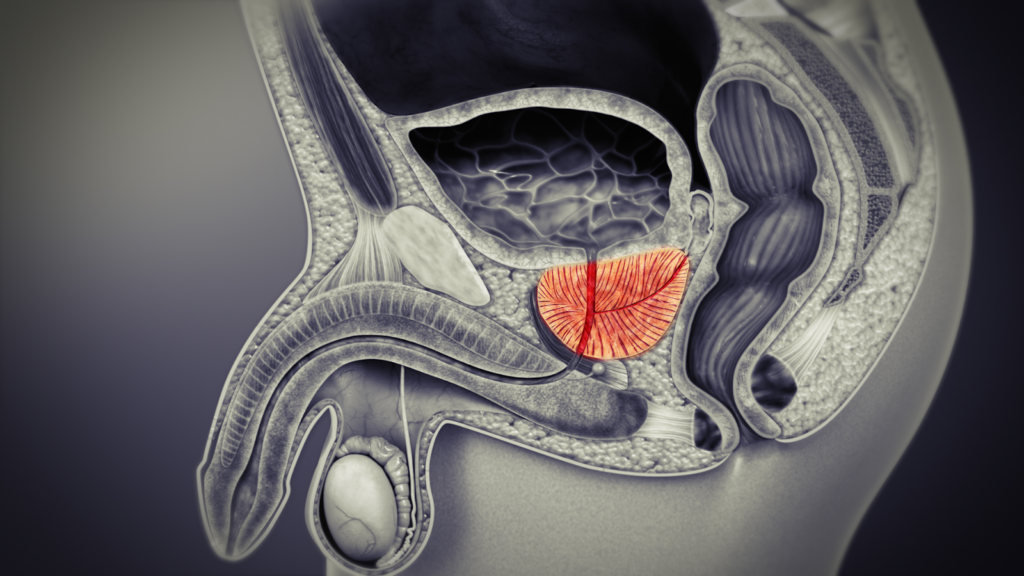
If you’re tempted to get creative with what’s lying around at home, it’s important to know that not all materials are equal when it comes to your body’s safety. Some can be adapted for safe use with a little care, while others are better left in the drawer, toolbox, or fridge.
Safe Materials for DIY Prostate Toys
If you want to make something you can use more than once, start with materials designed to be body-safe and non-porous:
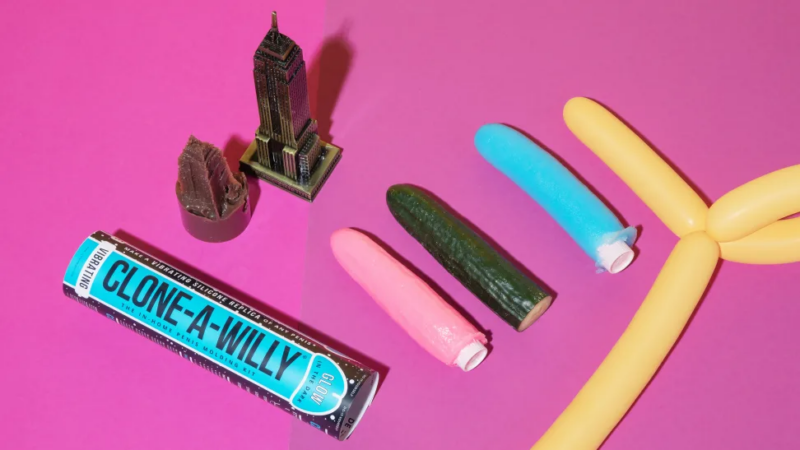
- Medical-grade silicone. Flexible, smooth, and easy to clean. You can find silicone mold kits online for shaping your own toy.
- ABS plastic. Rigid but body-safe, and a good choice for those who prefer firmer pressure.
- Stainless steel. Smooth and durable, though more advanced to shape at home.
- 3D-printed body-safe resin. Only if you have access to a printer and the correct resin rated for internal use (and you sand and seal it properly).
Pro tip: If you’re ever unsure about a material, test it on your skin first and research whether it’s rated as “body-safe” for internal use. Your prostate will thank you.
Common Household Items to Avoid
You might have heard stories or seen cheeky internet threads about people using everyday objects for anal play. These items might seem harmless because they’re so common, but they actually pose real risks when used internally:
- Glass bottles or jars. Even thick glass can chip or shatter.
- Vegetables. They can break, leave residue, and aren’t truly sterile.
- Wood. Even sealed wood can splinter or trap bacteria in tiny pores.
- Cheap plastics. Many are porous, contain harmful chemicals, or become brittle over time.
Beginner-Friendly DIY Substitutes
If you’re new to crafting a toy, you can start with items that mimic the shape and feel of store-bought stimulators but can be made safely:
- Modified handles: Some smooth, flared-handled utensils (like certain kitchen spatulas) can be adapted if they meet all safety criteria.
- Silicone baking molds: Create custom shapes using body-safe silicone.
- Custom 3D prints: Use existing prostate toy designs available online, but print them in approved, body-safe materials only.
Try Lovense app-controlled anal toys!
Ridge – Vibrating Anal Beads
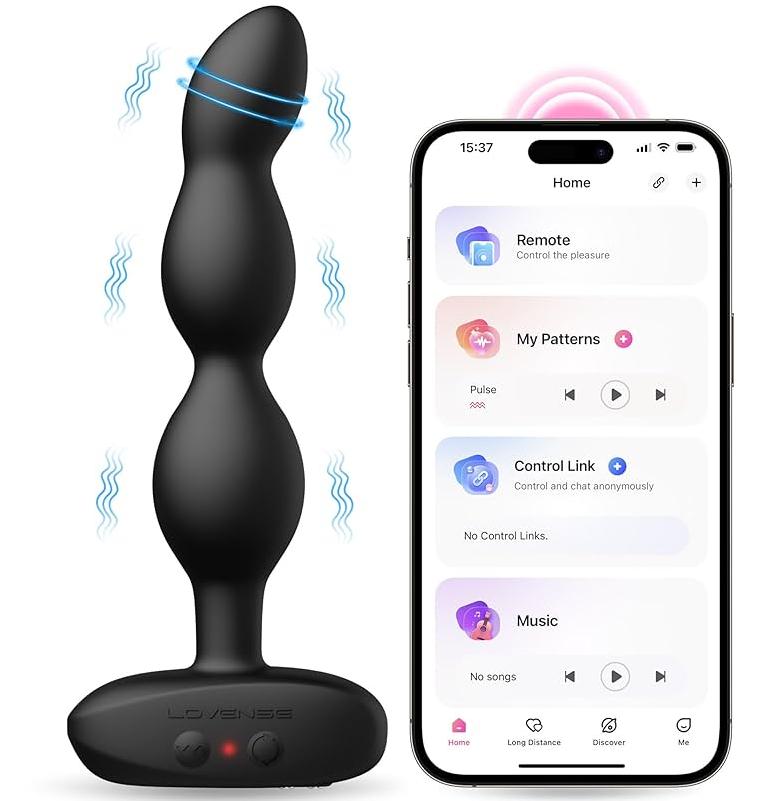
- Body-safe silicone & high quality
- Ergonomic curve for targeted pleasure
- Powerful & adjustable vibration
- Customized patterns via the app
Hush 2 – Vibrating Butt Plug
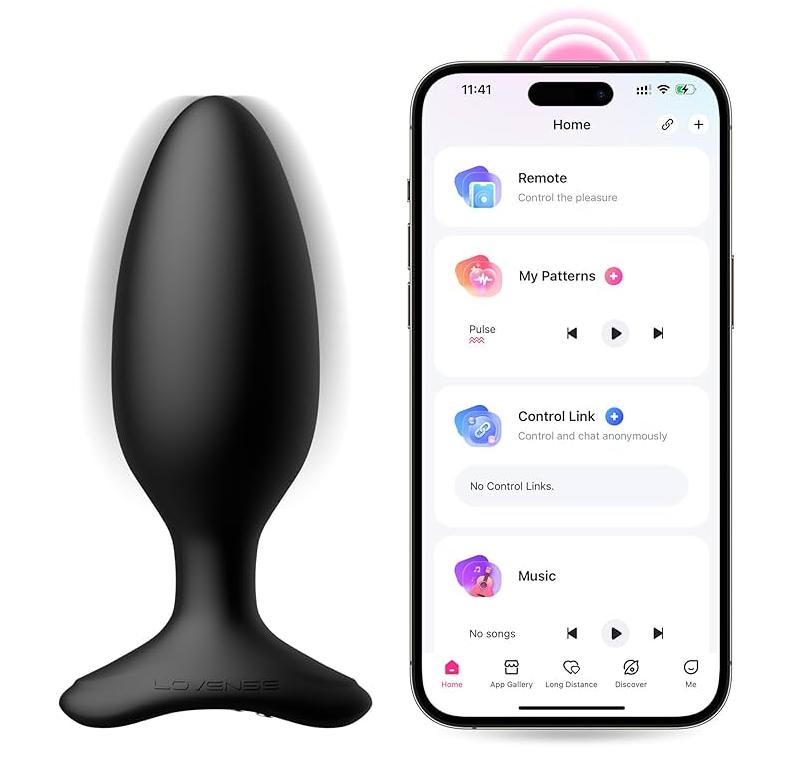
- Body-safe silicone & super sleek
- Available in small size – Perfect for the beginners
- Flard base to ensure safety
- Powerful & adjustable vibration
How to Make a DIY Prostate Stimulator
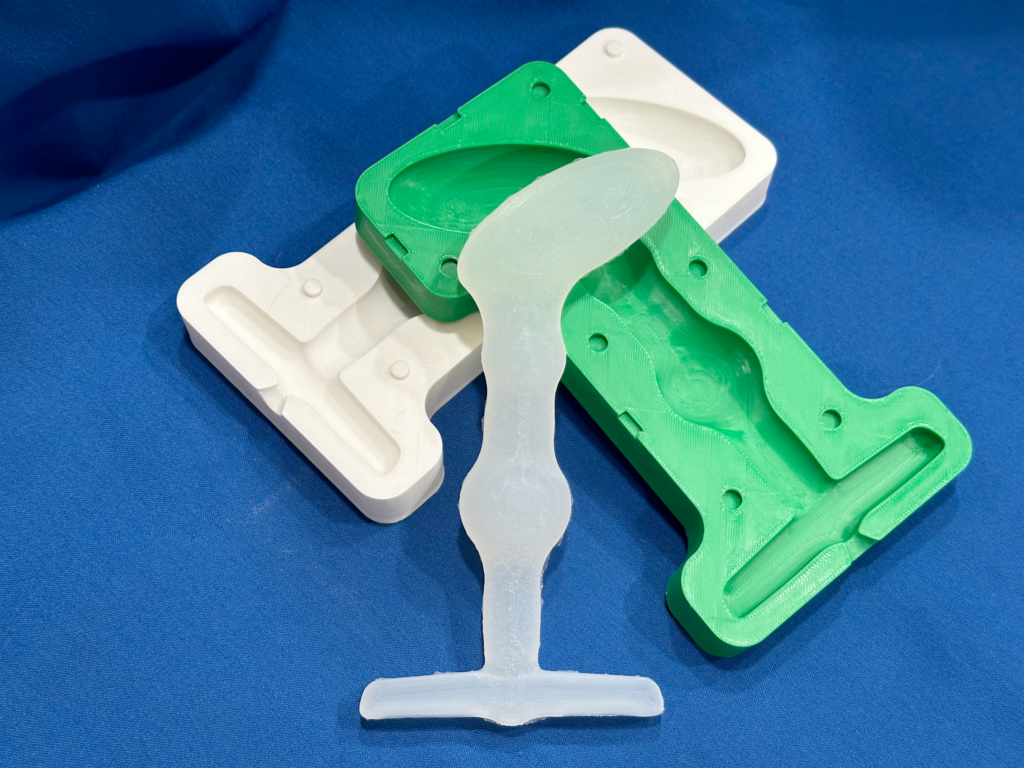
Before we dive in, a quick reality check: even when you use the safest methods and materials, anything homemade will carry more risks than a toy made by a reputable manufacturer. Commercial toys go through rigorous testing for durability, material safety, and hygiene, which can’t be replicated in a DIY setting. That said, if you follow the right steps, you can create something much safer than grabbing the nearest household object.
Silicone molding (recommended)
Why this route: platinum-cure, body-safe silicone is flexible, non-porous, and easier on the body. You control the curve, the base, and the finish.
You’ll need
- Platinum-cure, body-safe silicone (look for “platinum cure” and biocompatibility notes from trusted suppliers)
- A two-part mold (buy one designed for prostate toys, or make/print your own; smooth internal walls are crucial)
- Disposable mixing cups and sticks, nitrile gloves, and a surface cover
- Optional: vacuum chamber or a gentle tapping method to release bubbles; a silicone-compatible mold release if using a silicone mold
Step-by-step
- Choose your shape
Use a prostate stimulator you like as a model or create your own design to 3D print (covered in the second option below). If doing the latter, draw a gentle S-curve that rises toward the belly button once inserted. Aim for:
- Bulb/head: ~2.8–3.5 cm diameter for beginners
- Insertable length: ~8–10 cm
- Neck: narrower than the head for comfort and retention
- Base: flared, wider than the head, easy to grip
Quick scenario: imagine lying on your side with knees slightly bent. The head should nestle forward and up, not straight ahead. If your sketch looks like it would point forwards rather than upwards once inside, exaggerate the curve a little more.
- Prepare the mold
Make sure the inner surface is perfectly smooth. Any texture becomes a seam on the toy. If casting silicone into a silicone mold, use a silicone-safe release so they don’t bond. - Mix and de-bubble
Follow the silicone’s ratio precisely. Mix slowly to minimize bubbles. Tap the cup on the table or use a vacuum chamber if you have one. - Pour and cure
Pour in a thin stream into the lowest point so air can escape upwards. Cure for the full time on the label. Don’t rush it. - Demold and finish
Trim flashing or tiny seams with a sharp craft blade or cuticle scissors. You generally can’t sand silicone cleanly, so your best defence is a smooth mold. If a faint seam remains, you can wipe on a very thin coat of the same mixed silicone to self-level, then recure. - Firmness check
Press the neck and head between thumb and forefinger. For beginners, a softer style feel is comfortable and still gives pressure. If it collapses too easily, the prostate contact will feel vague; if it’s too stiff, it may poke rather than massage.
Shaping for P-spot contact
- Build a gentle anterior curve that aims towards the navel when inserted.
- A slightly bulbous head helps “hook” the prostate; keep edges rounded.
- Add a comfortable base that sits flat against the perineum so the curve stays oriented in the right direction.
3D printing (two safer approaches)
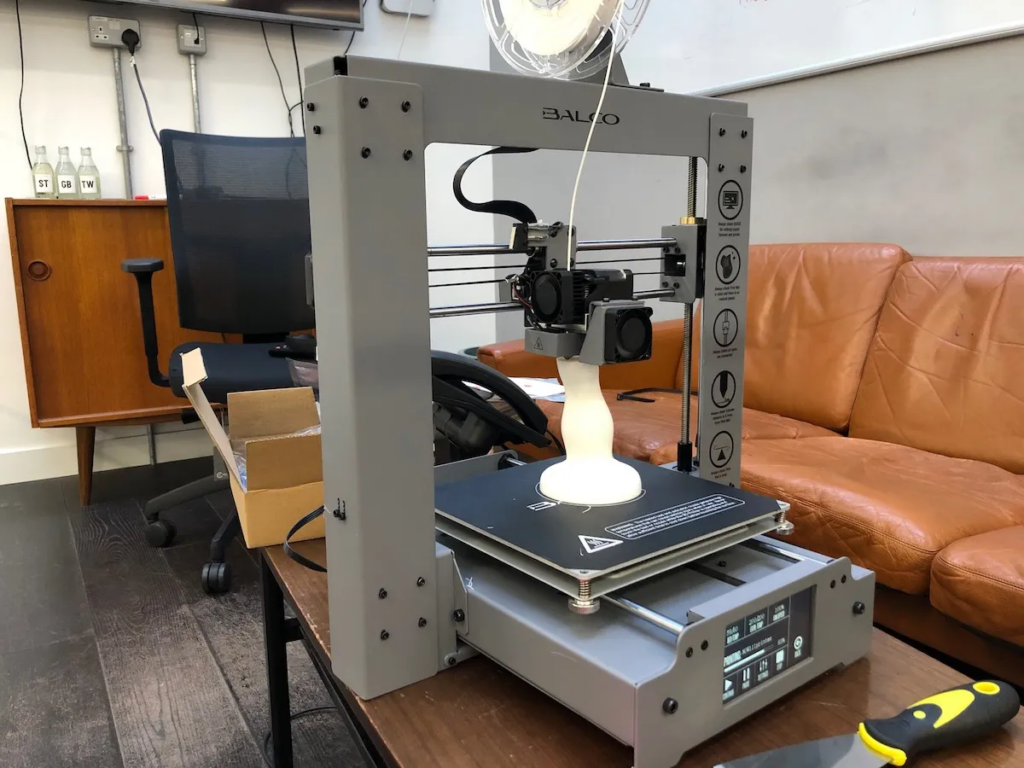
Best practice: print a mold and cast silicone into it. Printing the toy itself is only advisable if you use a resin specifically rated biocompatible for mucosal contact, fully post-cure it, and seal it to non-porous smoothness. That’s advanced, and still riskier than silicone.
A) Print a mold, cast in silicone (recommended)
You’ll need
- A 3D printer (FDM or resin) and a smooth two-part mold design
- Food-safe PLA/ABS or resin for the mold, plus fine files/sandpaper to polish the mold’s cavity
- Platinum-cure, body-safe silicone, and the same kit as above
Steps
- Choose/modify a prostate-toy mold design with a flared base built in.
- Print at high detail and polish the inner cavity until it’s glassy smooth (wet-sand progressively to a high grit).
- Apply a suitable release, assemble the mold, and cast silicone following the steps from Option 1.
B) Print the toy itself (advanced; use with caution)
You’ll need
- A printer compatible with biocompatible resin rated for mucosal contact
- Manufacturer’s post-cure equipment/settings, wet-sanding papers (up to 1500–2000 grit), and a body-safe sealant recommended by the resin supplier
Steps
- Use a one-piece design with a flared base and rounded transitions to avoid weak points.
- Print, then fully post-cure exactly as specified by the resin manufacturer.
- Wet-sand until perfectly smooth. No layer lines, no pits.
- Seal the surface if the resin supplier requires it for non-porosity. Cure again.
- Inspect carefully. If you can feel any texture with a fingertip, don’t use it internally.
Shaping for P-spot contact
- Add 25–35° of upward curve from the shaft to the head.
- Keep the head slightly wider than the shaft for a “press and rock” sensation rather than a jab.
- Ensure the neck is comfortably narrow so the head stays angled into the prostate rather than slipping out of position.
Universal finishing and safety checks
- Surface test: close your eyes and run a fingertip over every millimetre. Any ridge you can feel will be magnified in use.
- Base test: tug firmly on the base. It should feel sturdy and easy to grip.
- Flex test: bend the neck gently. You want spring and return, not a brittle snap or a floppy noodle.
- Clean test: wash with warm water and mild, unscented soap. If residue clings or the surface stays tacky, it isn’t ready.
How to Use a DIY Prostate Stimulator Safely and Effectively
Once you’ve carefully crafted your toy, it’s time for the fun part. But don’t skip the prep. The prostate responds best when you’re relaxed, aroused, and taking things at your own pace. Even with a safe, body-friendly design, the right approach can be the difference between “meh” and mind-blowing. Start the quick tips below, or dive into our full guide to using a prostate massager for step-by-step advice.
What to Expect the First Time
Your first prostate play session may feel more awkward than explosive, and that is completely normal. Some people feel gentle pressure before pleasure. Some need time to find the right angle. Some realize they are clenching without noticing. That does not mean you are doing it wrong.
If you are overwhelmed by terms like P-waves, Super-O, or rewiring, put them aside for now. A good beginner anal sex guide should start with first-step clarity, not advanced theory. Focus on how to start anal play safely. Once those basics feel familiar, the more advanced techniques will make much more sense.
Preparation Matters
- Clean it first. Wash your toy with warm water and mild, unscented soap (or a body-safe toy cleaner) before every use. This is especially important for DIY toys, as even tiny particles or residue can cause irritation.
- Use plenty of lube. Anal play demands more lubrication than you might expect. Go for a high-quality water-based product that’s safe for you and your toy, like Lovense’s Personal Lubricant Jelly. Apply generously to both the toy and your body. Avoid oil-based lube with latex barriers.
- Set the mood. A warm shower beforehand can help you relax and clean the area. Dim lighting, music, or even a few minutes of fantasy-building can help your body open up naturally.
Beginner-Friendly Positions
Finding the right angle is key to hitting the P-spot comfortably. Experiment with these:
- On your back, knees bent. Lie back with your feet flat on the bed. This opens your hips and gives easy access for self-play.
- Side-lying. Lie on your side with your top knee pulled slightly towards your chest. Great for slow, controlled insertion.
- Squatting. A deep squat can align the prostate perfectly, though it’s better for more experienced users who have good balance.
Whichever position you choose, insert slowly and listen to your body.
Reading Your Body’s Signals
The prostate should feel firm, rounded, and responsive to gentle pressure. If you encounter:
- Sharp pain
- Strong resistance
- Persistent discomfort
…stop immediately. Pain is your body’s way of saying something’s not right — pushing through it can cause injury.
Instead, try relaxing, using more lube, or changing your angle. If discomfort continues, skip the session and check your toy’s shape, size, or surface for possible issues.
Store-Bought vs DIY Prostate Stimulator: Which is Right for You?
Making your own prostate stimulator can be a rewarding project; you control the curve, the size, the firmness, and maybe even the colour. For some, it’s a creative challenge and a way to save money. The trade-off? More time, more effort, and the reality that DIY toys can’t match the safety testing and precision engineering of commercial products.
Store-bought toys, on the other hand, are designed by experts who’ve spent years perfecting shapes, materials, and features. They use medical-grade, body-safe materials, undergo rigorous quality control, and arrive ready to use straight out of the box. You’re paying for reliability, performance, and peace of mind.
If you decide the ready-made route is worth it, here are two Lovense favorites worth your attention:
Lovense Edge 2: Adjustable Prostate Perfection
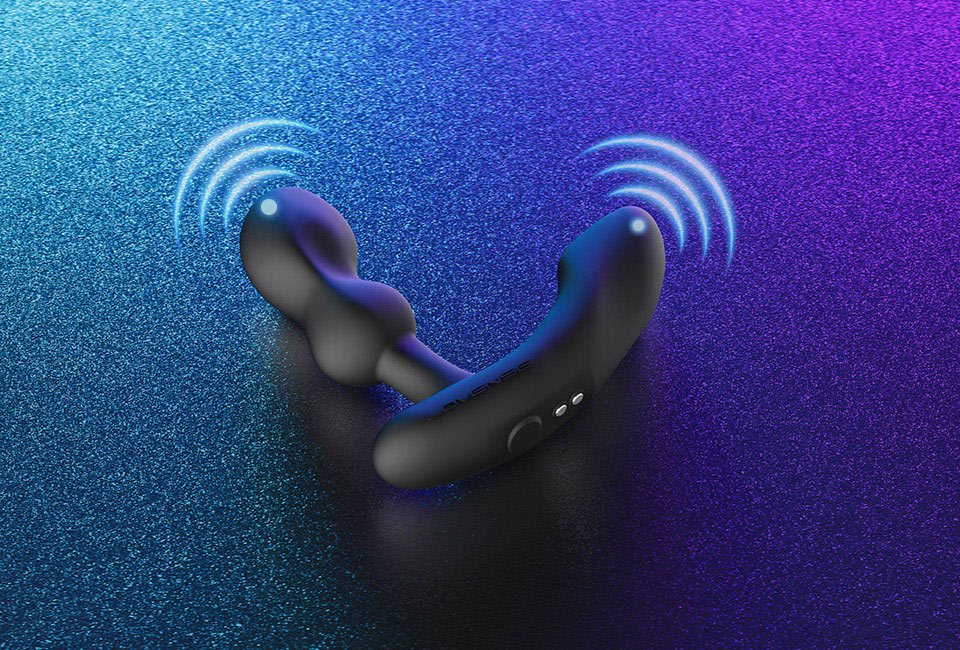
The Edge 2 is an app-controlled prostate massager with an adjustable neck so you can fine-tune the angle until it locks perfectly onto your P-spot. Mighty dual motors deliver deep vibrations to both the prostate and perineum, and you can control it solo or let a partner take the reins from anywhere in the world. It’s fully waterproof, made from body-safe silicone, and designed for comfort during long sessions.
Lovense Hush 2: Powerful, App-Controlled Fullness
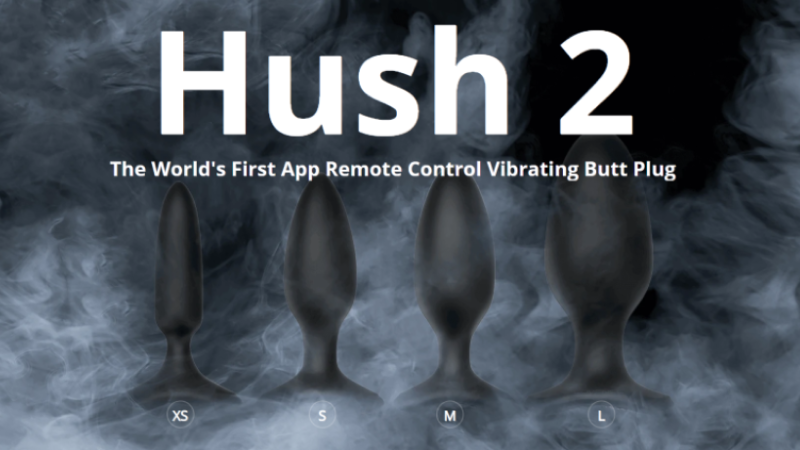
The Hush 2 is a sleek, smooth vibrating Bluetooth butt plug that gives you comfort and power in one package. The flared base keeps it secure, while its extremely powerful vibrations can be customized to your exact liking, whether you want a teasing buzz or deep, rumbly intensity. Available in four sizes, you can choose the fit that feels just right, from beginner-friendly to satisfyingly full. And like the Edge 2, it’s fully app-compatible for local or long-distance play.
Bottom line: If you love the idea of building something for yourself, DIY can be fun and personal. But if you want guaranteed safety, comfort, and next-level performance, it’s hard to beat a professionally made toy from a trusted brand like Lovense.
If You’re Worried Your Partner Will Misunderstand
For some people, the biggest fear around prostate play is not the toy itself. It is what might happen if a partner finds it, misunderstands it, or feels shut out. That is why searches like “hiding from wife” happen: curiosity turns into secrecy because someone worries they will be judged, rejected, or accused of wanting something “abnormal.”
The problem is that secrecy can create a bigger emotional risk than prostate play itself. If a partner discovers hidden use after months or years, the conflict may become about trust, embarrassment, or feeling excluded, even when the original interest was simply private curiosity. In extreme cases, that misunderstanding can damage the relationship far more than an honest conversation would have.
The safer path is to communicate properly before secrecy builds weight. Keep it simple: “I’m curious about prostate pleasure, I want to explore it safely, and I wanted to talk to you instead of hiding it.” Prostate play is not abnormal, and it does not have to be threatening to a relationship.
DIY Prostate Stimulator FAQs
A: It can be if you use body-safe materials, smooth finishes, and a flared base, but it will never be as safe as a professionally made toy.
A: Medical-grade silicone, ABS plastic, stainless steel, and fully cured, sealed body-safe 3D-printing resin are safe options.
A: No. They can break, leave residue, or harbour bacteria, increasing the risk of injury or infection.
A: Wash with warm water and mild soap before and after use; disinfect or boil if the material allows.
A: Use plenty of water-based lube for safe, comfortable play. We recommend Lovense Personal Lubricant Jelly.
A: It’s a firm, rounded spot about 2–3 inches inside, on the front wall, that responds to gentle pressure with deep pleasure.
A: Not always. For many people, using the bathroom first, washing externally, and taking a warm shower is enough.
A: No. Pressure can feel unfamiliar, but sharp pain means stop, slow down, or try another day.
A: Give yourself privacy, go slowly, breathe, and stop treating the first try like a performance.
A: Ignore advanced terms at first. A beginner anal sex guide should start with safety, comfort, and simple first steps.
A: Use a body-safe toy with a flared base, avoid household objects, and keep the first session simple.
A: Yes for most beginners. Edge 2 removes the guesswork around shape, materials, cleaning, and P-spot angle.
A: It is a normal form of adult pleasure, not a threat. Talking early is usually better than hiding it.
Final Thoughts on DIY Prostate Stimulators
Exploring your prostate can be an incredibly rewarding experience, and with the right knowledge, preparation, and materials, DIY toys can offer a safe and satisfying way to do it.
If you want to skip the trial-and-error stage, explore trusted, professionally made anal toys and butt plugs from Lovense for more control and unforgettable orgasms. All designs are crafted with premium materials, tested for comfort, and built to deliver consistent, body-safe pleasure.
Want More Helpful Reads?
- Prostate Massager for Health: Improve Your Well-Being with a Smile
- Prostate Play Techniques: A Beginner’s Guide to Male Pleasure
- How to Build DIY Sex Machines: Step-by-Step Guides & Tips